Fine hair haircut guide
Haircuts for Fine Hair: Shape and Realistic Volume
Fine hair describes strand diameter; density describes how much hair is present. A useful haircut plan separates those variables, protects the weight you want, and rejects generated volume that is not supported by the source.
Try it on your photoOne free Safe Match · No card · Original deleted within 24 hours
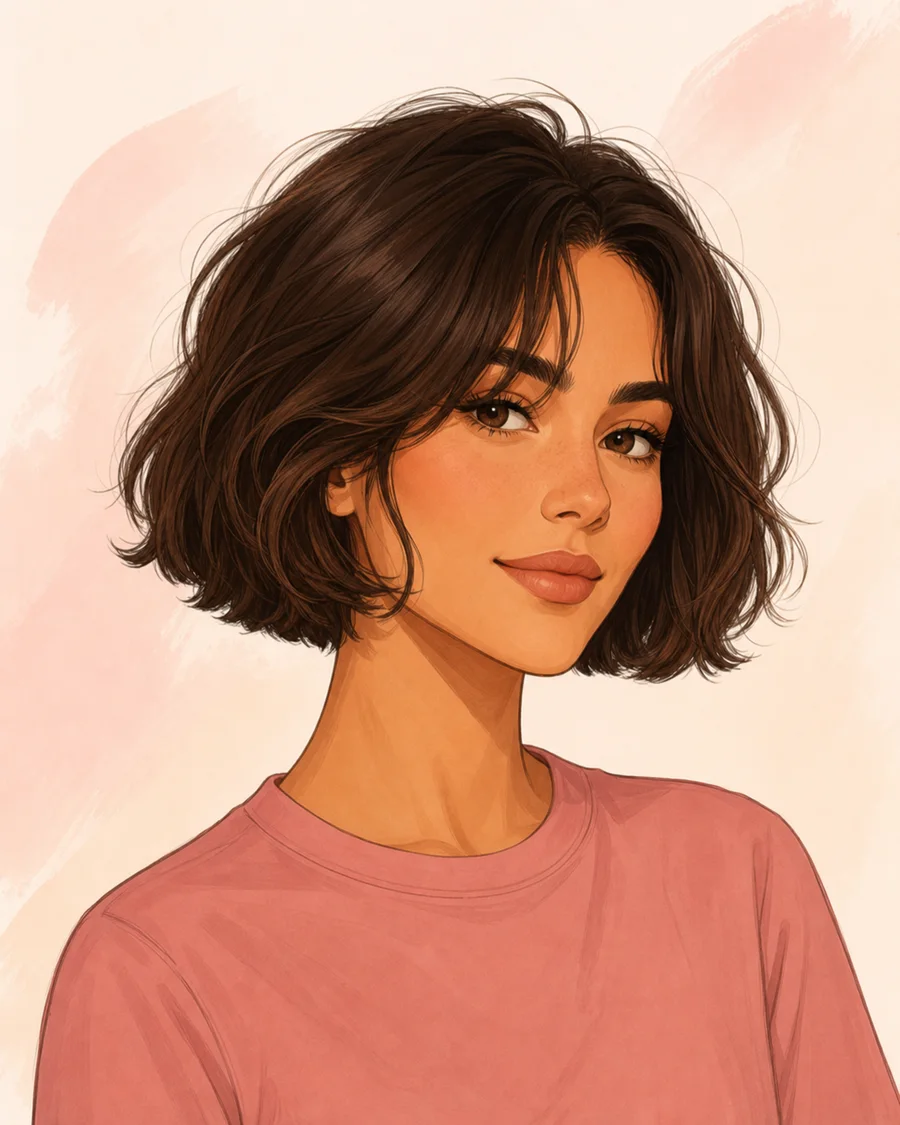
Useful directions
- Blunt or softly finished perimeters that preserve visible weight
- Restrained layers placed for movement rather than maximum texture
- Shorter lengths that reduce drag while respecting current density
Check before cutting
- Confusing fine strands with low density or assuming both are the same
- Too many short layers, aggressive thinning, or weak-looking ends
- AI results with invented root lift, thickness, or a fuller part
01
Separate strand diameter from density
Fine strands can exist in low, medium, or high density. Someone with many fine strands may have substantial volume but experience tangling or collapse at the roots. Someone with fewer fine strands may prioritize a strong perimeter and limited layering. A front photo cannot measure these variables reliably, so use your lived experience and a stylist’s in-person assessment.
Describe behavior instead of self-diagnosing a category: the ponytail circumference, how much scalp is normally visible at the part, whether the roots flatten quickly, whether ends become transparent, and how the hair responds to product. These observations help determine where weight can be removed or should be preserved.
02
Protect the perimeter before adding movement
A blunt line groups ends together and often creates a stronger visual edge. “Blunt” does not require a rigid, heavy shape; the surface can still have soft texture while the outer perimeter remains substantial. Long, sparse ends may look fuller when brought to a single healthier length, but the chosen point should still support tie-back and personal preference.
Layers redistribute weight. A few longer layers can release movement without making the ends feel thin. Many short or disconnected layers may reduce the perimeter and demand styling to look intentional. Ask where each layer begins and what problem it solves before approving it.
03
Be skeptical of dramatic generated volume
AI previews may add dense roots, a narrower part, perfect bends, or a thicker fringe because those features complete the visual pattern. Compare the part width, temple area, fringe density, and ends directly with the source. A haircut can change lift and distribution, but it cannot create additional strands.
Separate temporary styling volume from structural shape. A round-brush blowout, rollers, dry texture spray, or backcombing can produce fullness for a period of time. If you prefer air-drying, request a preview and salon explanation that remain credible without those techniques.
04
Choose length by weight, function, and routine
Shorter hair can reduce drag and make root lift easier, but short is not automatically fuller. The outline, density, parting, and styling matter. A collarbone lob may preserve tie-back while strengthening the ends; a chin bob may make the perimeter more prominent; a pixie distributes the limited length very differently and requires regular shape maintenance.
Consider product load. Heavy oils or creams may collapse fine strands, while too much dry product can make them feel rough. Ask the stylist to show a minimal routine and specify which part of the result comes from the haircut. A practical cut should still have a readable shape when the styling is imperfect.
A practical comparison
Strong blunt lob or softly layered shape?
The decision is not “volume versus no volume.” It is where to preserve a strong edge and where limited layering can release movement without inventing density.
| Compare | Blunt collarbone lob | Soft long layers |
|---|---|---|
| Perimeter | Groups most ends at one line, making the outer edge a visible feature. | Keeps length while distributing some ends through the interior and face framing. |
| Movement | Movement comes mainly from natural texture, subtle surface work, or styling rather than short layers. | Selected layers can move more freely, though too many may make the lower edge feel sparse. |
| Routine | Can read clearly with a simple finish; polished smoothness may still require heat. | Layer definition often becomes more visible with waves, a blowout, or targeted product. |
| Key safeguard | Choose the length that strengthens the edge without sacrificing required tie-back. | Agree on the shortest layer and preserve enough internal and perimeter weight. |
Use this page
A step-by-step decision check
-
Step 1
Describe actual behavior
Record root collapse, part visibility, end transparency, tangling, and product response. Keep strand fineness and overall density as separate observations.
-
Step 2
Mark the strong line
Choose where the perimeter looks and feels most substantial while keeping any needed tie-back or styling function.
-
Step 3
Assign a purpose to layers
For every proposed layer zone, state whether it creates face movement, releases bulk, or supports texture. Remove layers with no clear job.
-
Step 4
Audit generated density
Reject previews that narrow the part, thicken fringe, add unsupported roots, or turn transparent ends into a dense curtain.
Questions to take to your stylist
Use these as conversation starters. Your stylist can inspect the hair in person and choose the technique.
- How would you describe my strand diameter and density separately after seeing the full head?
- Where should the perimeter sit to preserve visual weight and the tie-back length I need?
- Which layers would add useful movement without making the ends feel less substantial?
- How much of this preview’s volume comes from blow-drying or product rather than the cut?
- What is the simplest routine that keeps the shape readable on an ordinary day?
Frequently asked
What to know before you choose
Are blunt cuts always best for fine hair?
No. A strong perimeter can preserve visible weight, but restrained layers may add useful movement. The choice depends on density, current ends, natural texture, desired shape, and routine.
Does short hair automatically make fine hair look fuller?
Not automatically. Reducing length may reduce drag, but the result also depends on perimeter, density, parting, root behavior, texture, and styling. Compare a credible air-dried version before deciding.
Should fine hair be thinned with shears?
There is no universal answer. Do not request a technique from an image alone. Describe the desired reduction or movement and let a stylist assess whether any weight removal is appropriate for your density and behavior.
How do I spot unrealistic volume in a preview?
Compare part width, temple coverage, fringe thickness, root lift, and the density of the ends with the source. Hair can be redistributed or styled, but a haircut cannot add strands.
See it before you decide
Start with one free Safe Match
Upload first, review the explanation and identity match, then decide whether another direction is worth one credit.
Upload a selfie