Hairline-aware haircut guide
Haircuts for a Receding Hairline: Styling Choices
A haircut can change contrast, direction, and visible volume around a receding hairline. It cannot diagnose why the hairline changed or restore missing density. This guide stays with practical appearance choices and honest preview limits.
Try it on your photoOne free Safe Match · No card · Original deleted within 24 hours
Useful directions
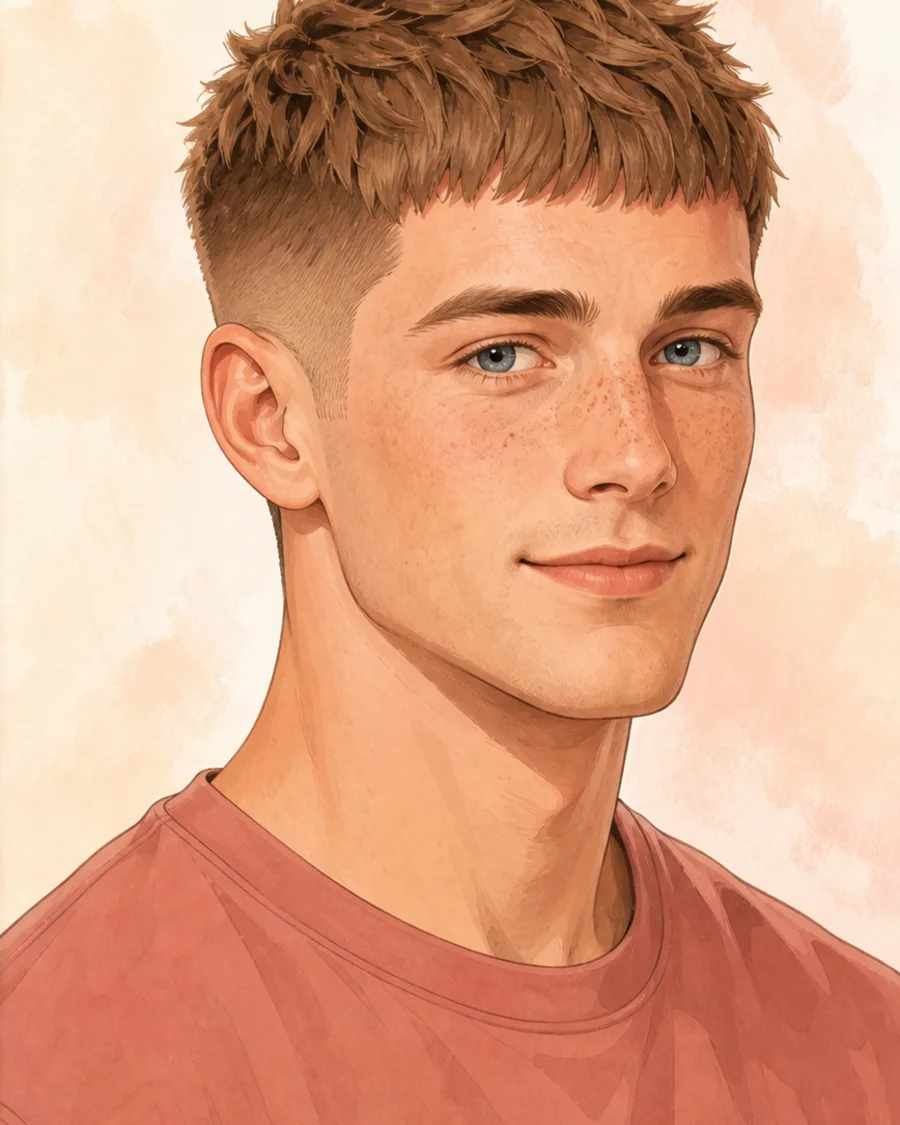
- Textured crops that follow natural forward or diagonal growth
- Shorter, controlled sides that reduce contrast with the top
- Simple styles that remain coherent without daily concealment work
Check before cutting
- Promises that a cut or generated image will restore density
- Previews that fill temple areas not supported by the source photo
- Styles that fight the natural direction with heavy product or heat
01
Begin with visible contrast and growth direction
A hairline-aware cut can work with what is present by controlling the difference between denser and lighter areas. Very short sides next to a much longer top can increase contrast; a more connected transition may reduce it. Forward, diagonal, or lifted styling changes which boundaries are emphasized. The useful option is one that follows the actual growth pattern and available density.
Take neutral photos from the front, both temples, and above if comfortable. Do not use fibers, wet-look product, or strong directional styling for the assessment photo. Those can hide the evidence a stylist needs. You can style the final cut however you prefer, but planning should begin with a clear baseline.
02
Compare coverage with an intentionally open approach
A textured crop can move hair forward or diagonally and make density transitions feel less graphic. An open, close-cropped style does the opposite: it stops relying on coverage and uses a consistent short length to create clarity. Both can look deliberate. The choice depends on growth direction, available top length, routine, and whether coverage itself creates daily anxiety or effort.
Avoid treating the more covered option as automatically better. If a preview invents a dense fringe or fills the temples, it may create a goal the haircut cannot deliver. Inspect the source and result at the front corners and reject any image that adds unsupported hair.
03
Keep texture controlled and achievable
Texture can break up a smooth surface and reduce the contrast between sections, but it still needs enough length and density to form. Ask whether the intended texture comes from point cutting, natural curl, matte product, blow-drying, or a combination. A glossy slick-back usually exposes the hairline more clearly; a matte, irregular finish may create a softer transition.
Choose product based on hold and finish rather than claims about changing hair growth. Begin with a small amount and ask the stylist to demonstrate the direction. If the style collapses without extensive product, decide whether that routine is acceptable before committing to the length distribution.
04
Know when haircut guidance ends
HairFit discusses visible styling and does not infer a health condition from a photograph. A haircut cannot identify the reason for a change. If the change is sudden, patchy, uncomfortable, or concerning to you, seek advice from an appropriately qualified health professional rather than relying on an appearance tool.
For the salon conversation, stay concrete: desired side length, top length, direction, amount of visible hairline, finish, and minutes of daily styling. Those details help the stylist create an honest version of the chosen shape without false promises.
A practical comparison
Textured crop or very short open style?
One direction uses available length to create movement; the other reduces the role of coverage. Compare them using the current density rather than a generated ideal.
| Compare | Textured forward crop | Very short open style |
|---|---|---|
| Hairline treatment | Uses irregular forward or diagonal movement to soften the transition at the front. | Leaves the outline visible and makes the overall length more consistent. |
| Density needs | Requires enough top length and density to form separate pieces without exposing large gaps. | Relies less on top length and does not ask the hair to create coverage it cannot support. |
| Daily routine | Often needs a quick directional dry and a small amount of matte product. | Usually needs less shaping, though regular trims keep the length intentional. |
| Preview risk | Generation may invent fringe density, so inspect temples and front edges carefully. | Generation may alter head or hairline shape; compare the outline directly with the source. |
Use this page
A step-by-step decision check
-
Step 1
Record the baseline
Use dry, unfiltered photos without concealing fibers or wet-look product. Include front and temple views if you are comfortable.
-
Step 2
Follow the growth
Brush the top in its natural forward, diagonal, or upward direction and note which option requires the least resistance.
-
Step 3
Reject invented density
Compare the temple corners and front line with the source. Do not use a result that fills areas or creates fringe unsupported by the photo.
-
Step 4
Rehearse the routine
Ask how to dry and finish the cut, then decide whether the required time, product, and trim schedule fit your week.
Questions to take to your stylist
Use these as conversation starters. Your stylist can inspect the hair in person and choose the technique.
- Which direction works with my natural growth rather than depending on constant repositioning?
- Would connecting the side and top lengths reduce unwanted contrast in my current density?
- How much top length is actually available for the texture shown in this preview?
- Can you demonstrate a matte, low-effort finish and show how it looks without product?
- What trim interval would keep either option intentional as the sides and top grow?
Frequently asked
What to know before you choose
Can a haircut reverse a receding hairline?
No. A haircut can change visible shape, contrast, direction, and styling, but it cannot restore density or determine the cause of hairline change.
Is a textured crop always the best option?
No. It depends on available top density, growth direction, preferred coverage, and routine. A very short open style, a connected classic cut, or another direction may be more practical.
How can I tell if an AI preview invented hair?
Compare the front corners, temple depth, part width, and density with the source. If the result fills exposed areas, creates a thick fringe from limited hair, or changes the hairline shape, reject it.
When should I seek advice beyond a stylist?
HairFit cannot assess health. If a hair change is sudden, patchy, uncomfortable, or otherwise concerning to you, contact an appropriately qualified health professional for guidance.
See it before you decide
Start with one free Safe Match
Upload first, review the explanation and identity match, then decide whether another direction is worth one credit.
Upload a selfie